





Melamine
A panel, often particleboard, with a resin-impregnated decorative surface. Cleaning, appropriate sanding and a compatible primer prepare it for adhesion. Lifting or swollen edges are assessed before finishing.
Cabinet material guide
Yes, these cabinets can be painted. Their smooth, low-porosity surfaces need suitable preparation and a compatible finishing system. Peeling coverings and swollen panels must be assessed before painting is proposed.
Request an estimateA panel, often particleboard, with a resin-impregnated decorative surface. Cleaning, appropriate sanding and a compatible primer prepare it for adhesion. Lifting or swollen edges are assessed before finishing.
A hard decorative surface bonded to a panel. Its low porosity calls for careful degreasing, even preparation without cutting through the decorative layer, and a suitable bonding system.
A PVC film formed over MDF. Well-bonded film can be assessed for painting; if it is lifting, particularly near a heat source, we determine whether further work or door replacement is more appropriate.
These clues help with the assessment, but appearance alone does not always confirm the material. Send photos of the face, back and edge of an open door to help us identify the surface.
| Possible material | What to look for |
|---|---|
| Melamine | A decorative surface with separate edge banding; a particleboard core may be visible at a drilled hole or damaged edge. |
| Laminate | A bonded decorative layer, often thicker; a solid colour or wood pattern alone does not identify it. |
| Thermofoil | Film wrapping the door face and profiles; check its join on the back and any lifting areas. |
| Painted MDF | Paint over a fine-fibre panel, sometimes visible at a drilled hole; the material needs confirmation before preparation. |
Doors and drawer fronts are removed and labelled. Degreasing, cleaning with TSP where compatible, suitable sanding with dust extraction and dust removal come before a bonding primer selected for the surface. The system is assessed before application, especially over an existing paint finish.
Doors are then finished flat in the workshop. Visible cabinet frame faces are finished on site in a protected, ventilated area. Cabinet interiors are never included. Edge repairs, damaged panels and handle changes are specified in the quote.
Satin enamel, 1K lacquer, a catalysed 2K system and a high-gloss piano finish are among the options offered, depending on the surface and desired result. Compatibility, sheen and care are discussed using real sample doors.
Compare finishing systems and starting budgets →These projects illustrate colour changes and finishing results on different surfaces. For your kitchen, the material, its condition and your desired result guide the choice of finishing system.
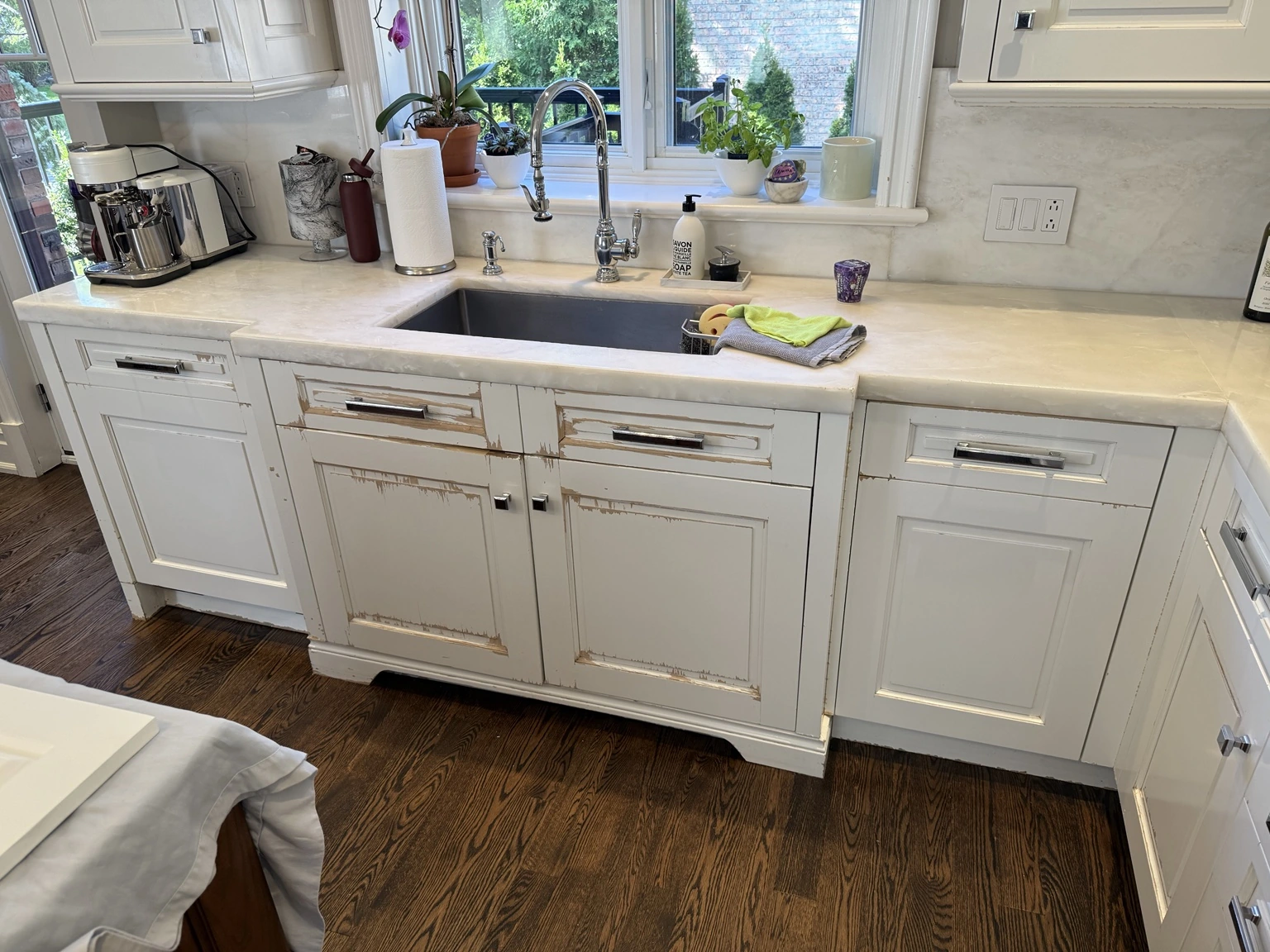
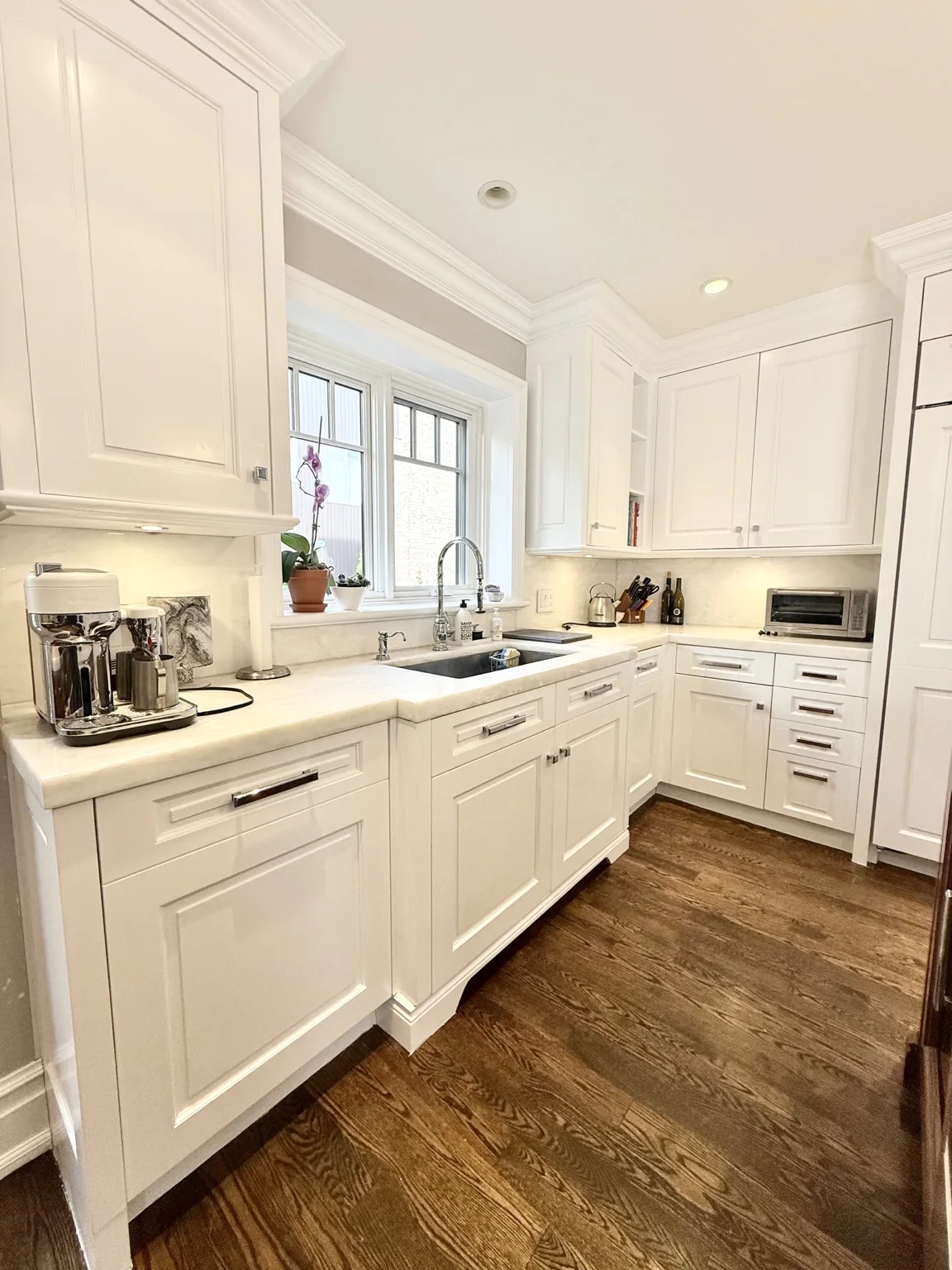
The white finish had visible chips and worn areas around the doors and drawers. Refinishing with Lorchem Aqua Stone 2K restores an even colour across the fronts while retaining the moulded door details.
View project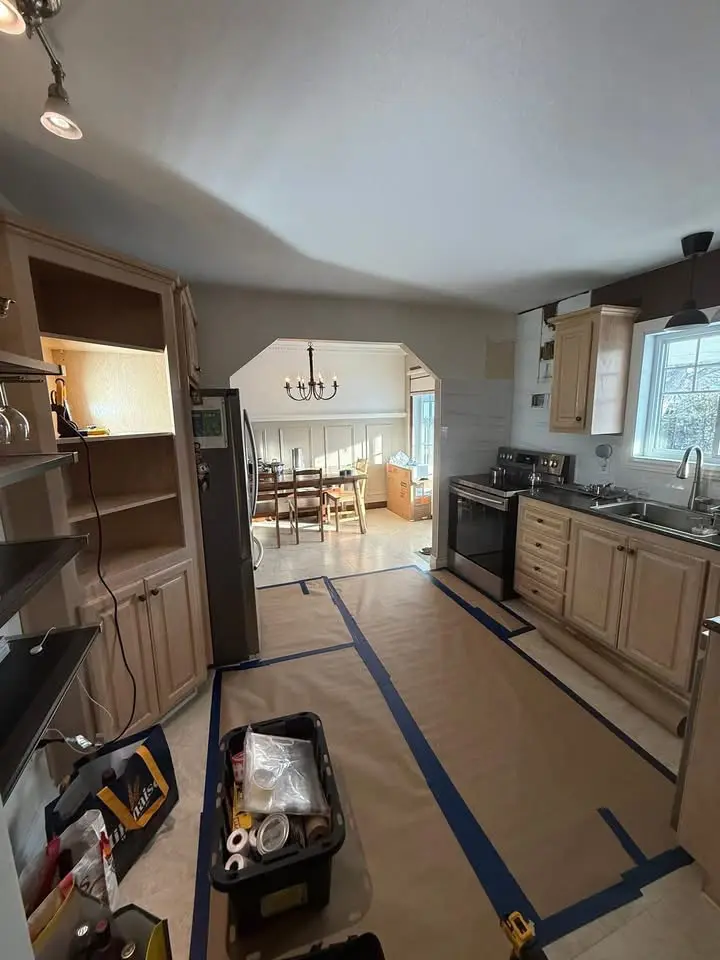
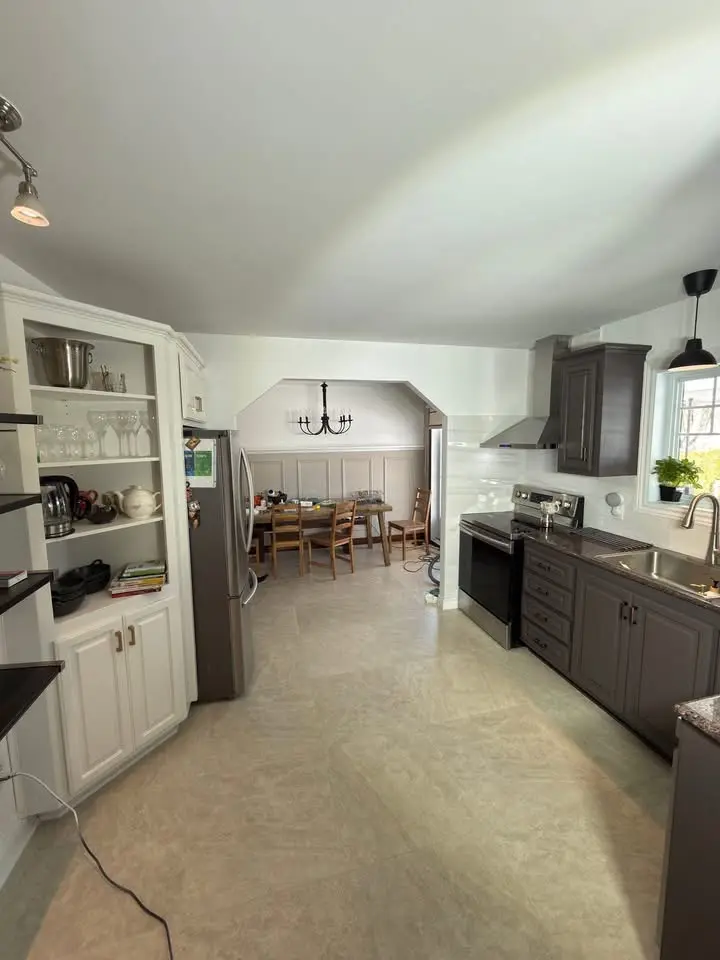
This kitchen had light wood-coloured fronts before the transformation. Benjamin Moore Command creates a two-tone palette, with white elements to brighten the space and dark grey to define part of the cabinetry.
View projectPossible causes include residual grease, insufficient preparation, incompatible layers, moisture or inadequate curing time. The existing finish and its adhesion need to be examined before choosing how to refinish it.
Not if it is intact and firmly bonded. Lifting edges need assessment for repair or replacement. If the panel itself is swollen, a coat of paint will not correct the damage.
Spraying provides an even application, but it does not automatically hide texture, profiles or surface defects. Any additional preparation and the expected result are discussed before work begins.
Pricing depends on the number of pieces, their condition, preparation, repairs and the finishing system. The material can change the steps required; your quote explains the work planned for your kitchen.
Montréal’s South Shore is our usual service area. Travel to other areas is assessed according to the project and availability; any applicable fees are confirmed before scheduling a visit.
See service areas and travel arrangements